Interactive GPU sessions
Jupyter, VS Code or a terminal on a slice of a card, opened from the console. No API key and no batch queue to learn.
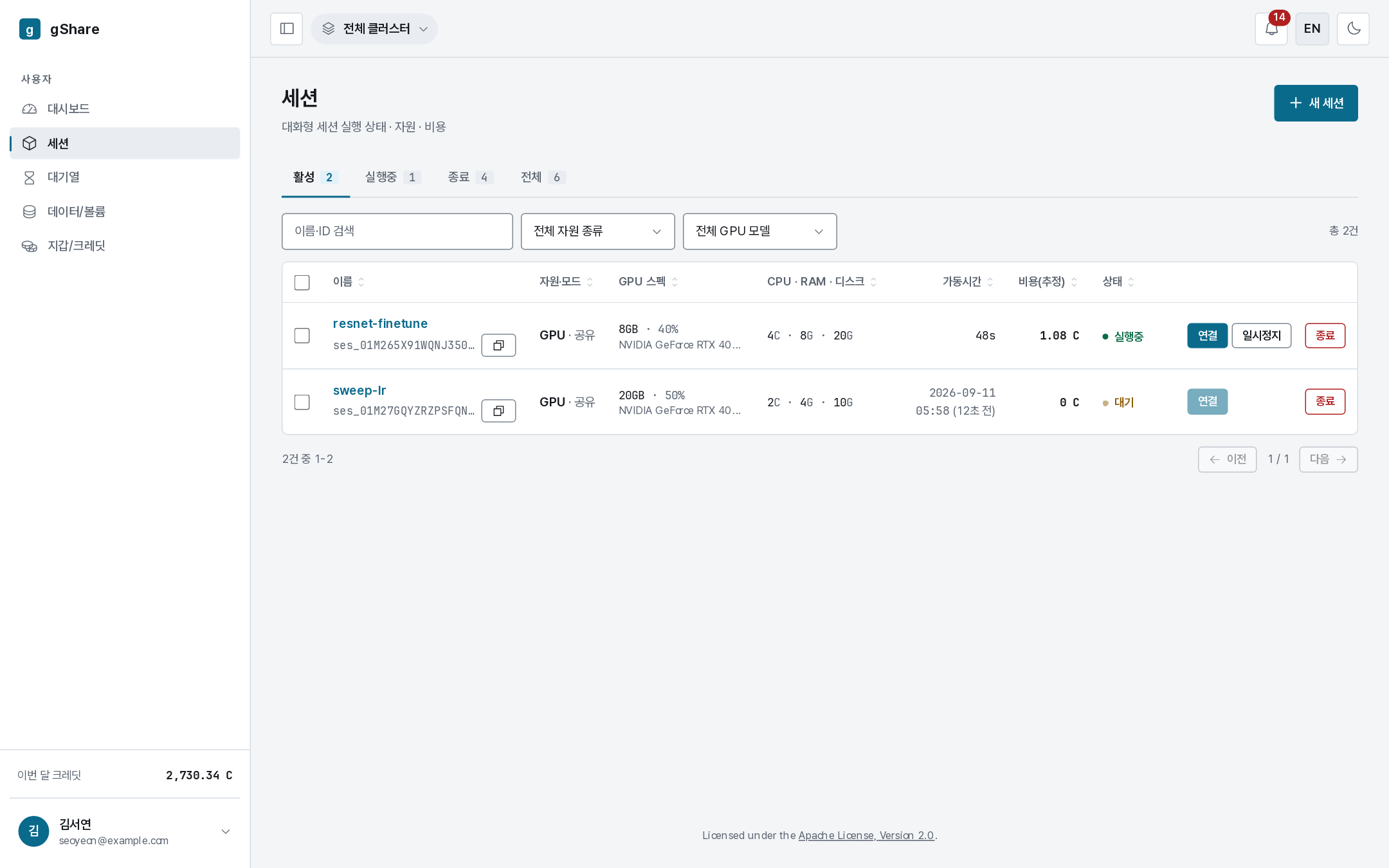
HAMi splits the card. gShare places the session, bills it, and takes the card back. All of it from one console.
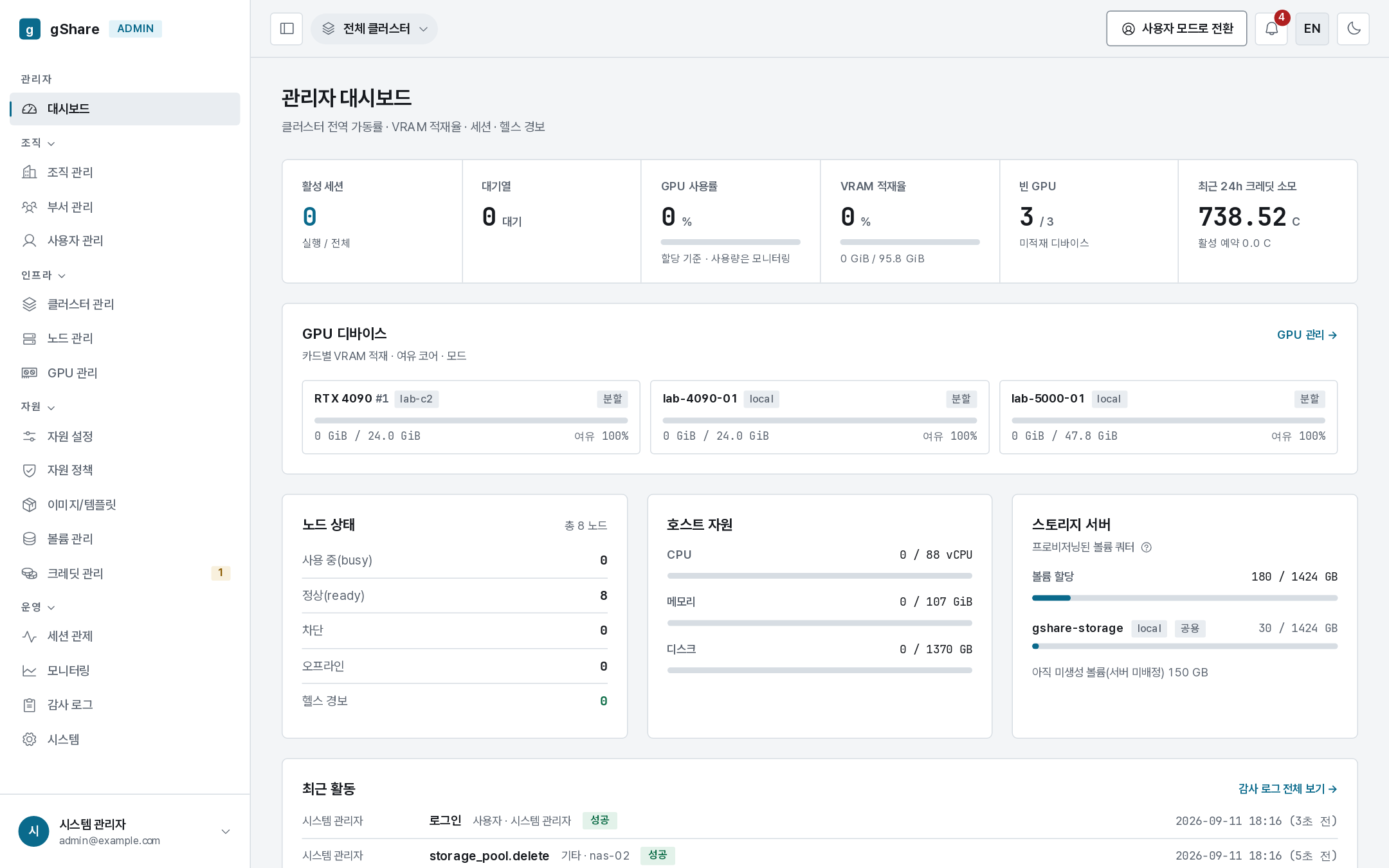
Jupyter, VS Code or a terminal on a slice of a card, opened from the console. No API key and no batch queue to learn.
A session holds credits before it runs, consumes them as it runs, and settles when it ends. Every move is audited.
Attach a second GPU cluster with one script. Sessions land where their data lives, on storage pools with a measured capacity.
A tier is a fraction of one card, and the bill follows the occupancy it actually takes. Idle GPUs are paused and handed back.
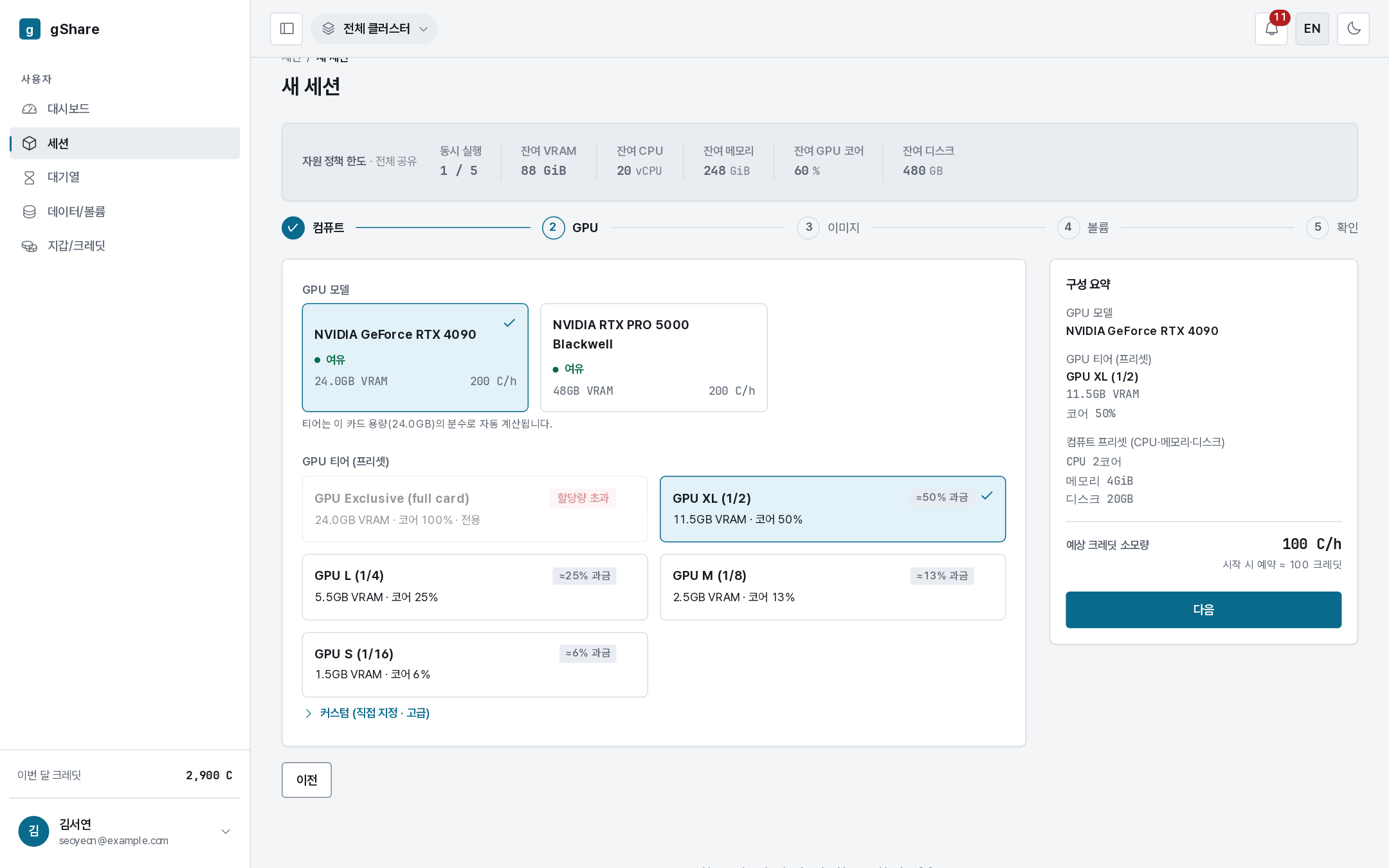
Postgres, Redis, the API and the console come up together. Running a real session needs a GPU cluster.
$ git clone https://github.com/boanlab/gshare
$ cd gshare
$ make compose-up
$ make smoke
Console on localhost:8000, API on localhost:8080. Tear it down with make compose-down.