Intervening in a session
Everything on this page acts on other people's work. Each action is audited with your name, and the owner is notified.
Force-terminating one session
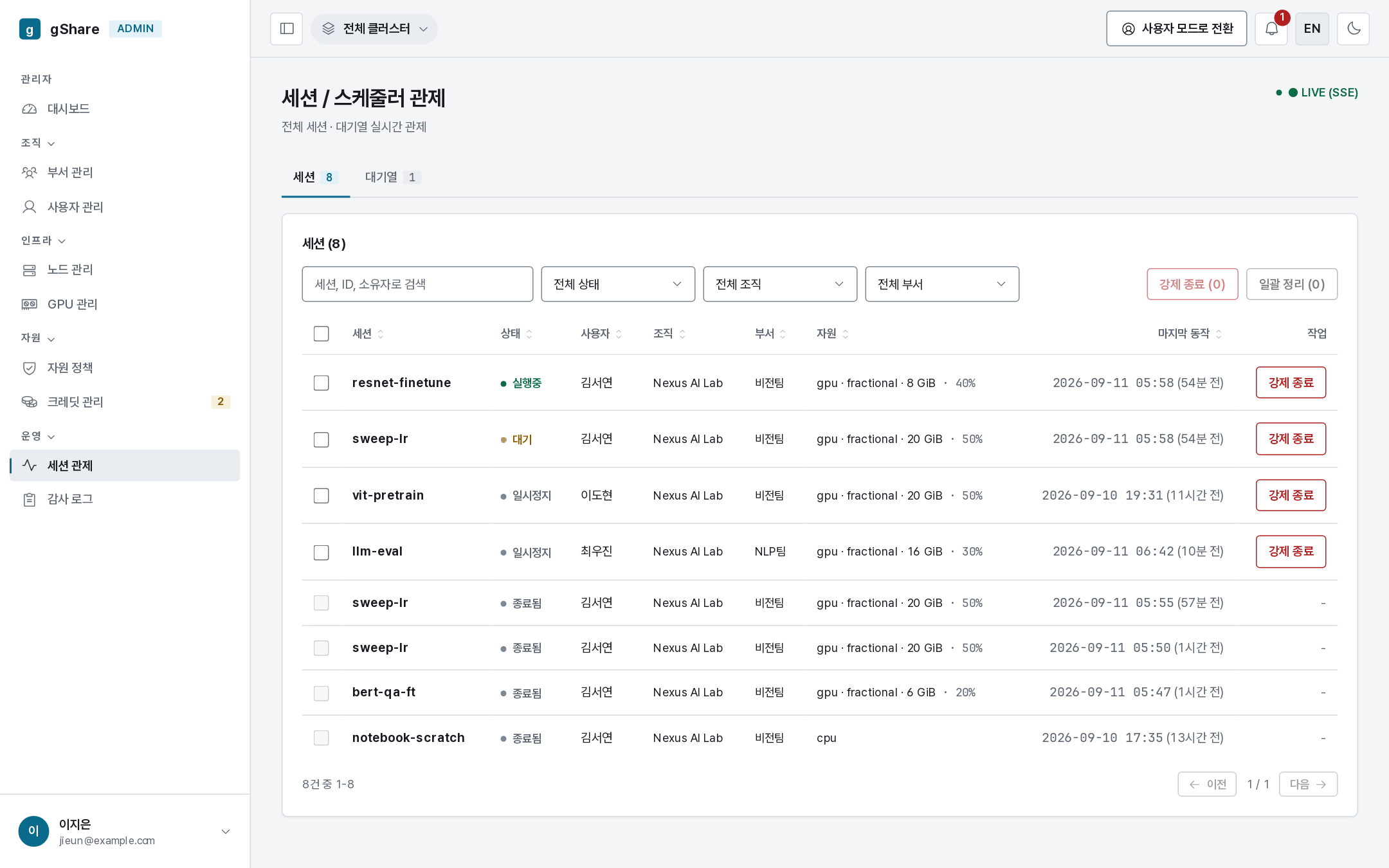
Force terminate on a row ends a session without the owner's consent:
- The container is stopped and the GPU returned to the pool immediately.
- The bill is settled exactly as an owner-initiated stop would be — consumed credits charged, the rest of the hold refunded.
- The owner is notified, and the free-text reason you type lands in the audit log next to the session id.
The session's status_reason is the typed admin_stopped, which the console renders as a
message to the owner. Write a reason someone can act on ("blocking the 4090 for a class at
14:00"), not "cleanup".
Bulk clean-up
Tick several rows and the toolbar buttons activate — Force terminate (N) and Bulk clean-up (N). The confirmation names every session it is about to end, and from five sessions upward it asks you to type the count.
The sessions belong to other people; the count is there to make a slip impossible, not to be tedious.
The queue
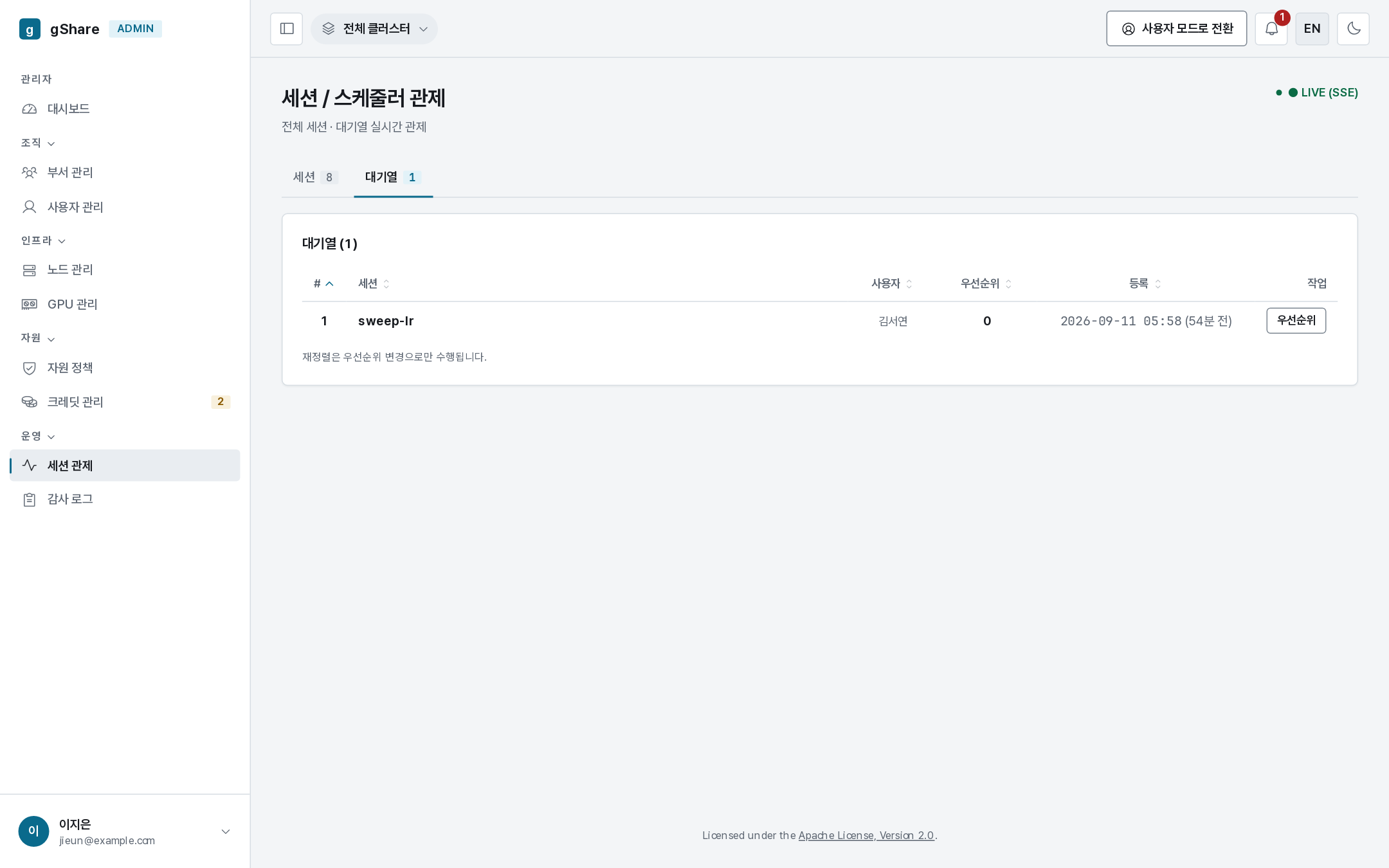
The Queue tab lists sessions waiting for capacity with their position, priority, wait reason, and requested resources.
| Action | Effect |
|---|---|
| Priority | Sets the entry's priority band (an integer; higher is dequeued first) — for a demo, a deadline, a class |
| Removing an entry | There is no cancel button here: force-terminate the pending session from the Sessions tab. The hold is released in full; a session that never ran is never billed |
Priority is the honest lever when the fleet is full. Force-terminating someone else's running session so a queued one can start is the other one — use it knowingly, and say why.
Before you terminate: is it actually stuck?
| Symptom | Usually |
|---|---|
| Session pending for a long time | The queue, not a fault — check the wait reason |
| Session running, GPU at 0% | An idle notebook. The idle policy will pause it; consider lowering the timeout instead |
| Session restarting repeatedly | The crash-loop rule will end it within minutes |
| Node full of sessions you need to move | Drain the node — it reschedules instead of killing |
Draining is nearly always better than terminating: it moves the work rather than destroying it.