Node pools
A pool is a named set of nodes inside a cluster. It is how a department that bought its own machines gets first claim on them without running a separate platform.
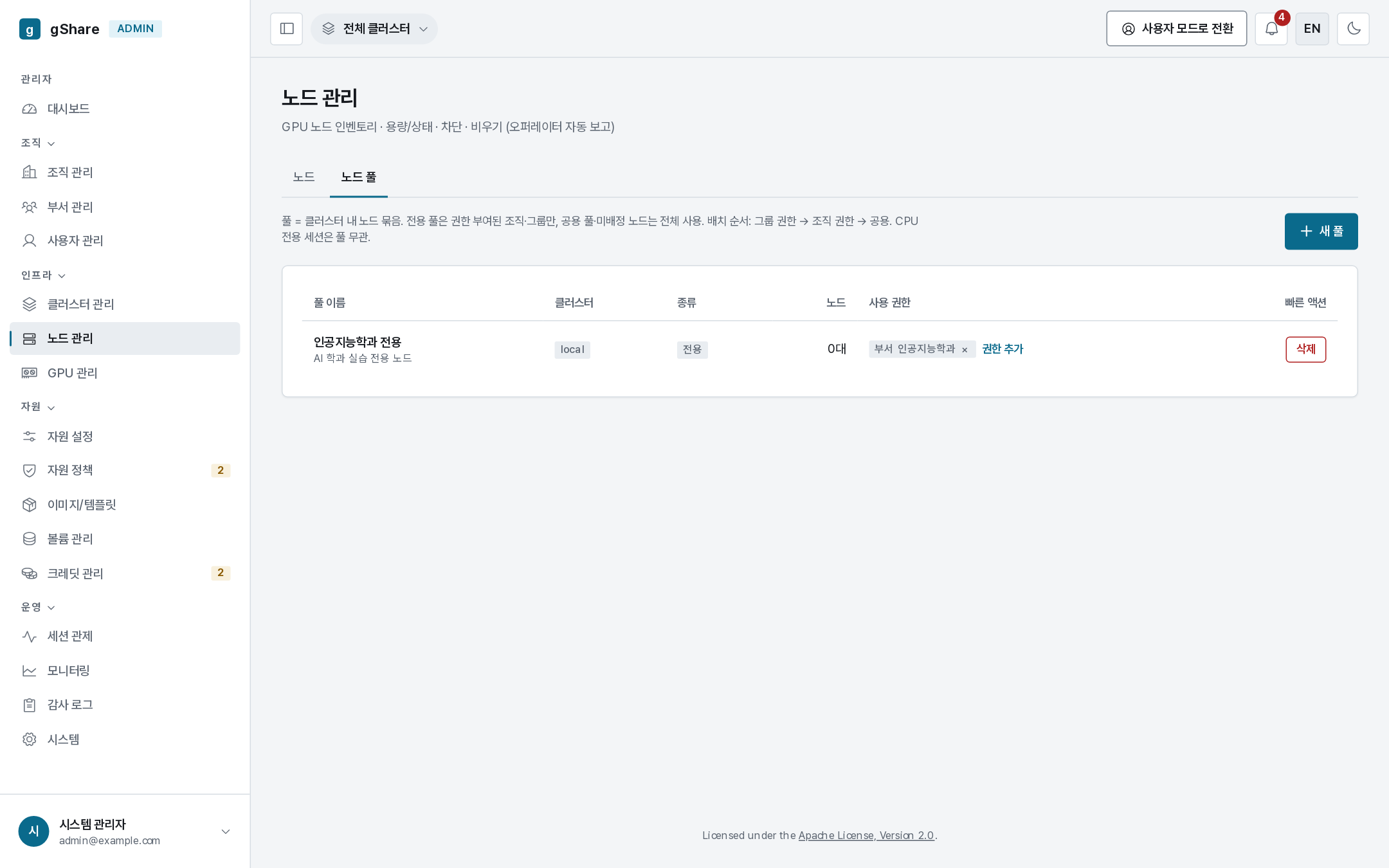
| Kind | Who may be placed there |
|---|---|
| Dedicated | Only organizations and groups explicitly granted access |
| Shared | Everyone |
| (unassigned) | Nodes in no pool behave as shared |
Placement is tried in order: group grant → organization grant → shared. CPU-only sessions ignore pools entirely.
Creating a pool and filling it
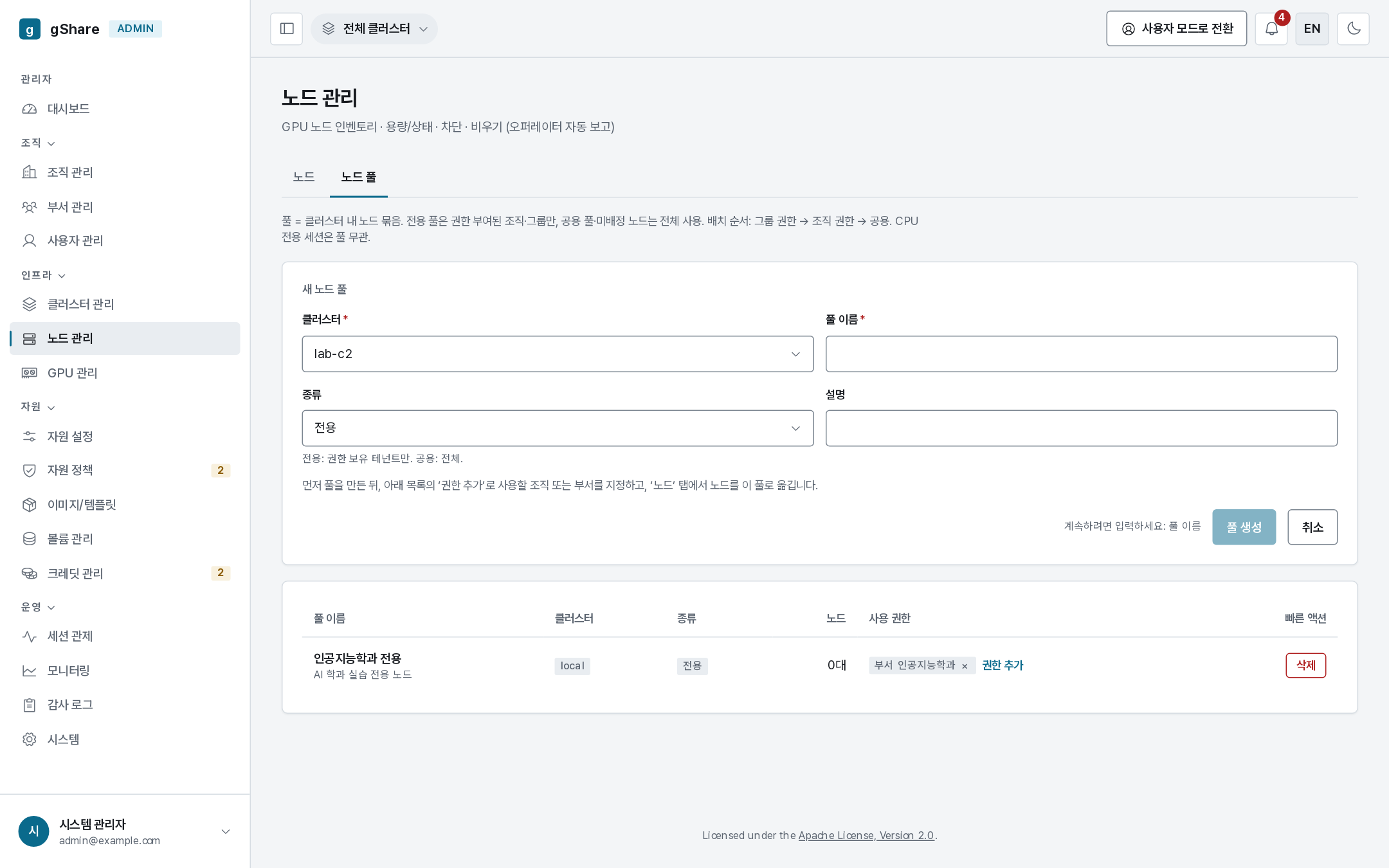
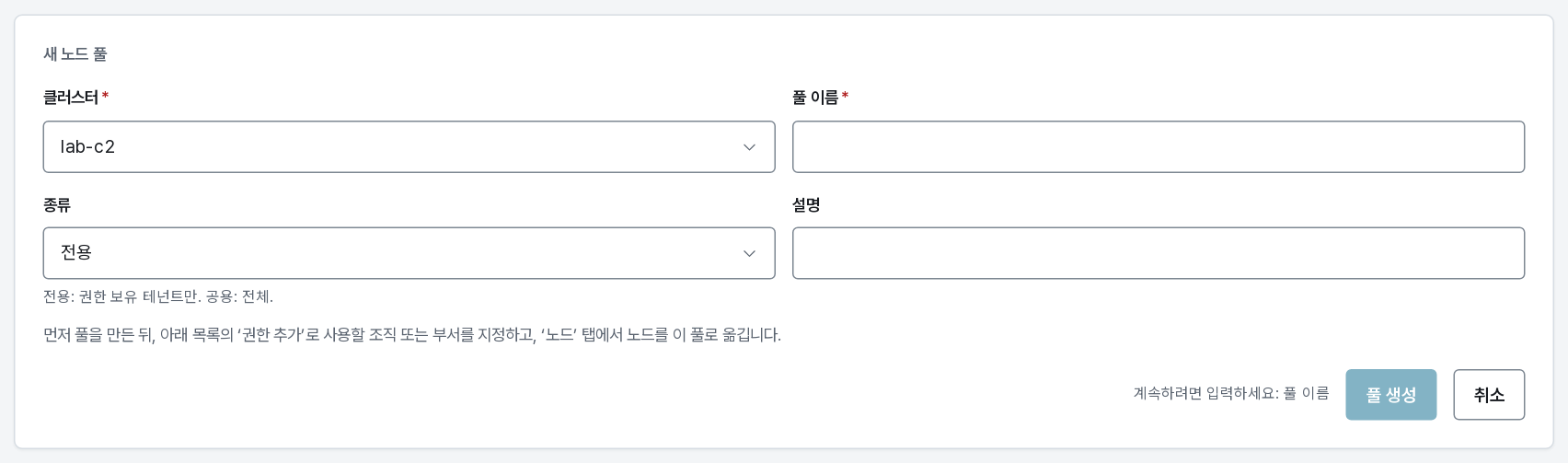
- New pool — name, cluster, kind (dedicated or shared), description.
- Add grant — the organization or group that may use it.
- Nodes tab — set each node's target pool. The change is queued: the card stops taking new sessions and moves to the new pool once it is empty, so nothing running is disturbed.
Revoking and deleting
Revoke a grant and that tenant's new sessions stop landing on the pool; running ones stay.
Delete a pool and its nodes return to shared, and all its grants go. It is refused while sessions are running on the pool's nodes — cordon them first.
The spill question
A tenant whose dedicated pool is full falls back to shared nodes only if their policy allows the shared pool. That switch is the whole design decision:
- Spill allowed — the department always gets its own cards first but can borrow idle shared capacity. Best utilization.
- Spill denied — the department is strictly capped at its own hardware. Predictable for everyone else, and the department's queue is entirely their own to manage.
Whichever you choose, say so out loud: a user whose session queues while cards sit idle elsewhere will otherwise report it as a bug.