GPU offerings
An offering is one GPU model as a billable product. The session wizard is built from this catalog, and the scheduler prices against it.
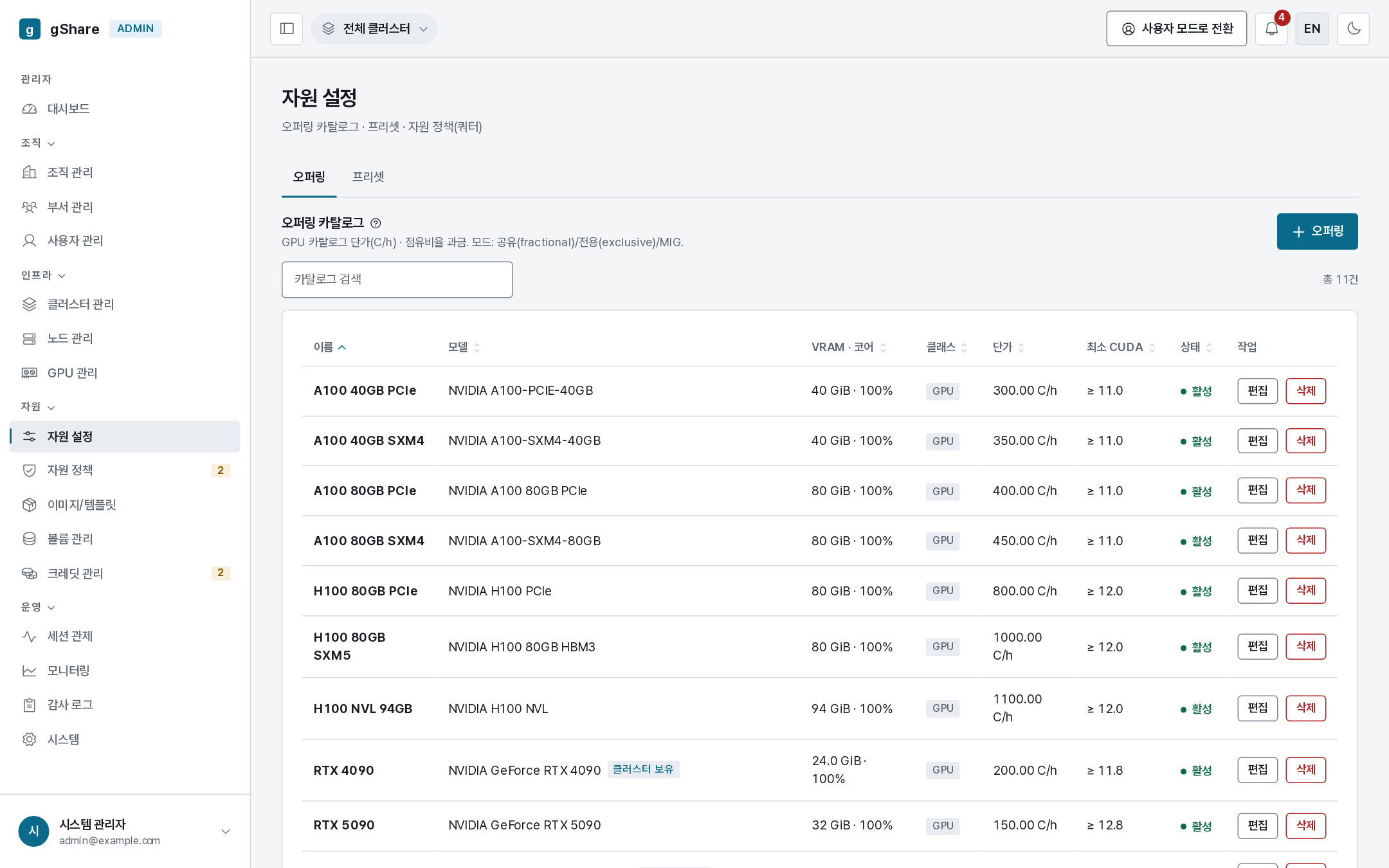
| Column | Meaning |
|---|---|
| Name | What users see, e.g. RTX 4090 |
| Model | The driver's exact model string, with an in cluster tag when the fleet reports it |
| VRAM · cores | The whole card |
| Class | gpu (billed) or cpu (free compute offering) |
| Rate | Credits per hour for a whole card; a fraction costs its share |
| Min CUDA | Images below this version are refused for this model |
| Status | Active offerings appear in the wizard; inactive ones are kept for history |
Creating one
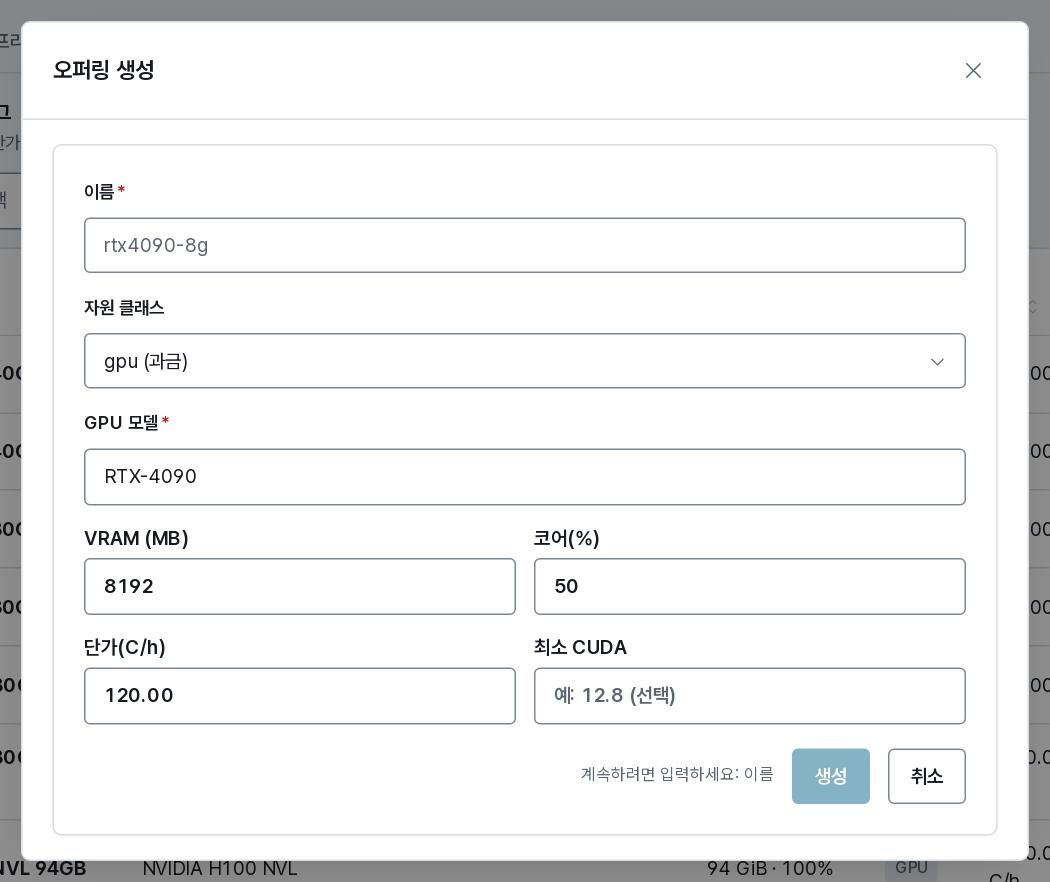
Admission matches gpu_model to the string the driver reports, character for character —
NVIDIA GeForce RTX 4090, not RTX 4090. Copy it from GPU devices rather than
typing it.
If the fleet reports a longer SKU (… Max-Q Workstation Edition) and exactly one offering is a
word-boundary prefix of it, that offering adopts the reported string automatically, audited as
offering.align_model. When a session is still refused with unserviceable, the error lists
the models the fleet actually reports — copy one of them in.
Setting the rate is a policy decision, not a technical one. Two anchors that work:
- Make the relative rates honest — if an H100 is worth three 4090s to your users, price it that way, so the cheap card is the sensible default for small work.
- Size the monthly credit budget so a typical user's typical month costs roughly what you intend to grant them. The absolute numbers only matter against that.
Editing and retiring
Editing a rate affects new sessions only — a running session keeps the rate snapshotted when it started, so a price change never rewrites someone's bill mid-run.
Every rate change is kept in the offering's price history (/api/v1/offerings/{id}/price-history),
so a bill from last term can always be explained.
Deactivate rather than delete when a model leaves the fleet: sessions and ledger rows reference the offering, and the history stays readable.
CPU offerings
A cpu-class offering has no GPU and a rate of zero. It is what makes free data-preparation
sessions possible. Cap those with policy limits, not with price.